
PATRICK McKEOWN WATCHED
AIR HUNGER.
here’s what stuck
SHOOTING WITH PATRICK
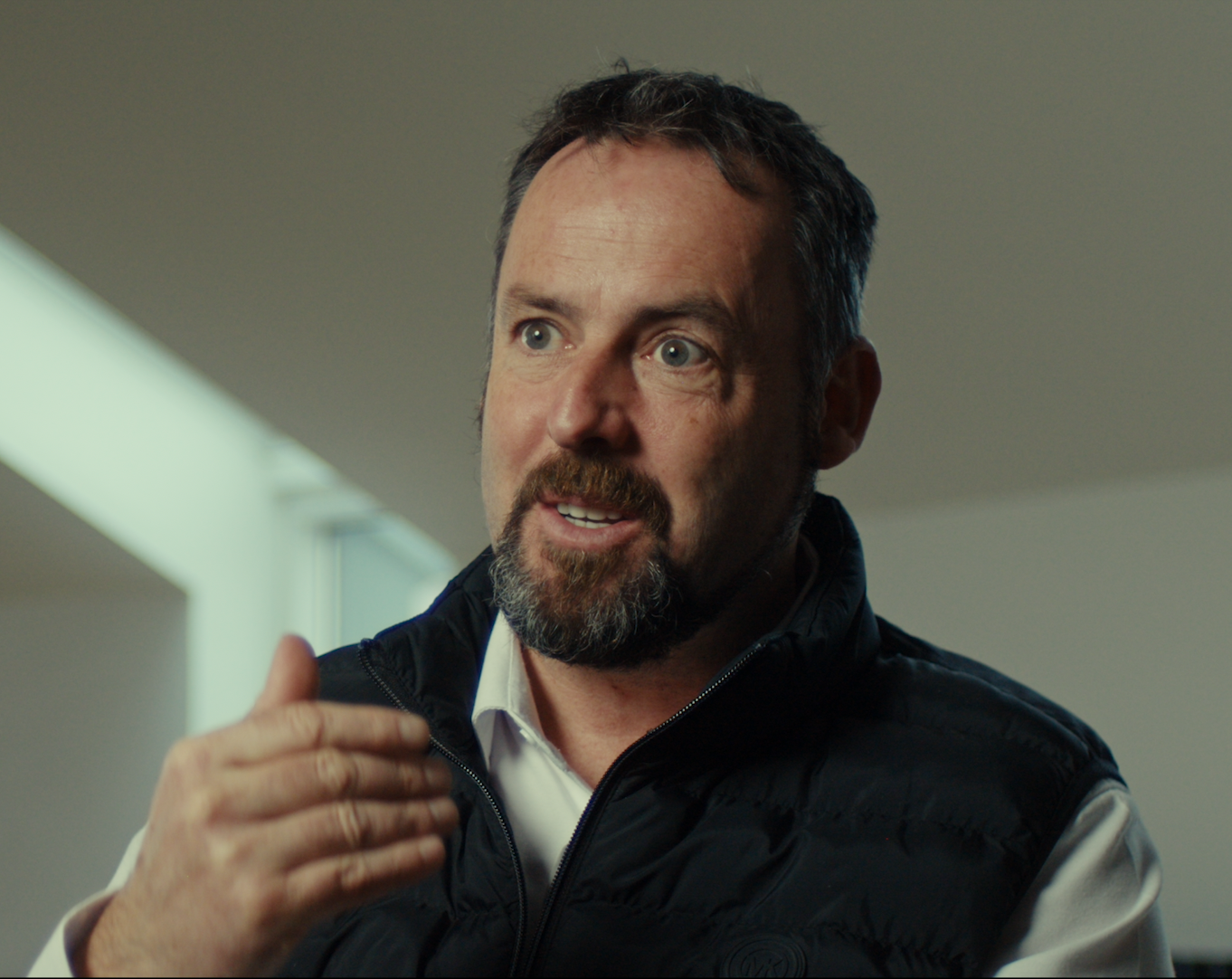
Three years ago, Patrick McKeown got a call about a documentary that wanted to put breathing on screen. He didn't hesitate. The man who wrote The Oxygen Advantage and built a career on a few square centimetres of airway said yes before he'd seen a single frame, because for him this was never really a film pitch. It was a distribution problem finally getting solved: a way to put breathing training's potential in front of audiences who might never otherwise hear about it.
"Breathing is the most underrated lever we have," he says. "It influences sleep, mental state, nervous system regulation, physical performance, even how oxygen moves from the blood to the tissues and organs. And it's so simple. With the breath… we breathe in and we breathe out. That's it!
But it's what you do with that which matters: you can breathe faster or slower, harder or lighter, through the nose or the mouth, high or low. Every breathing exercise in the world is built from that handful of variables. So the real question is, why doesn't everyone already know how to change their breathing to get what they want from it?"
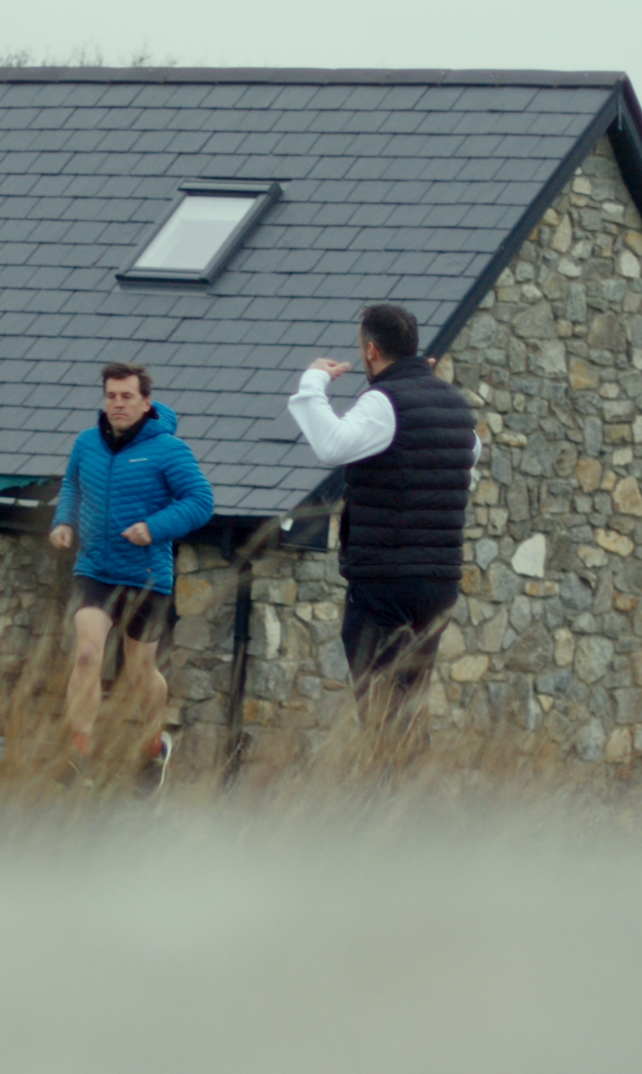
That question is more or less the engine behind Air Hunger, and it's why McKeown spent a day in a Galway gym putting ultrarunner Tobias Mews through his paces on camera. Read about the film in the article below.
SEE it first
Be the first to know when AIR HUNGER gets released online.

THE THREE WEEK EXPERIMENT
The brief for Tobias was simple on paper; reduce breathlessness.
"When people run, or do any endurance sport, it's not really their heart rate that decides when they have to slow down or stop. It's how breathless they feel. If we can improve someone's tolerance to carbon dioxide, strengthen the diaphragm, increase gas exchange, and reduce the psychological perception to air hunger - the athlete is able to keep going for longer not having to breathe so hard and fast. That's the whole game."
He measured Tobias's BOLT score, a simple test that gauges how functionally someone breathes, before starting. Three weeks later, with limited time before his event, his score had nearly doubled.
"He started somewhere around fifteen to seventeen seconds and ended up at 24. For someone later in his running career, not exactly twenty anymore, that's real progress in a short window. Age matters less than people assume. Consistency is what moves the number. Such an improvement to Tobias’s BOLT score means he is much more efficient with his use of air"
“Age matters less than people assume”
AFTER THE CREDITS ROLLED.
"What stuck with me is just how many different breathing techniques are in there. And the honest reminder that the research behind all of this is starting to catch up."
He's quick to push back on the idea that Air Hunger is a film for athletes only.
"This is a film for everybody. I'm pulled toward nasal breathing, functional breathing, hypercapnic - hypoxic training. Someone else might be interested in hyperventilation-style work.
The film doesn't pick a lane, and that's exactly why it works for such a wide audience."
THE MEDICAL WORLD
"Doctors are burning out too. They're stressed, experiencing mental health issues, no different to anyone else. There's a shift in thinking happening: many are realising that pharma doesn't have all the answers. Either for their patients or themselves. More and more, they are offering life skills that are accessible and can be incorporated into one's way of life."
"And while breathing is simple, like many things about being human, it is complex as well. It's not a case of one size fits all. Breathing training includes different dimensions; physiological, biomechanical, biochemical and psychological. This makes it harder to standardize, and this is where the skill of the breathing instructor comes in- to tailor exercises according to the age, breathing pattern, and state of health of the client."
This, he says, is exactly where a documentary earns its place.
"Breathing needs a lift to get it more mainstream. James Nestor did it with a book. Your film will do the same. In Air Hunger, improving performance in sport is the carrot and that's a good thing. It strips away the woo woo and makes it about performance instead, which gets the regular kind of person to actually try it. That's badly needed"
On the film itself, he doesn't hold back.
"It's genuinely accessible. The moment I pressed play I was hooked, totally engaged. Timemoved fast, which for a documentary is a good sign. I'd already forgotten I was supposed to be somewhere else."
“In Air Hunger, improving performance in sport is the carrot and that’s a good thing. It strips away the woo woo and makes it about performance instead,”
THE QUIET FBI STORY HE FINALLY GOT TO TELL
Near the end of the conversation, almost as an aside, McKeown mentions something he'd been sitting on for two years.
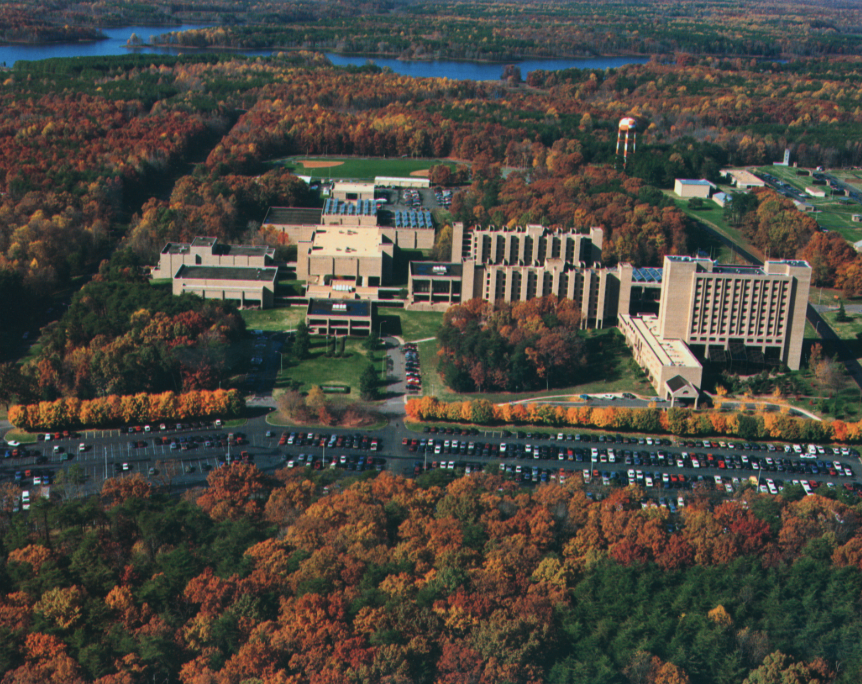
"I've been working with the FBI, but we couldn't talk about it publicly until recently. A couple of months ago I was at Quantico, inside their training base, working with breathing protocols in person. It's the same work; reducing breathlessness during physical movement, faster recovery, improving sleep quality, regulating the nervous system under pressure, just applied somewhere most people would never expect."
He sees the same shift happening in football and other sports. National teams are now bringing in breathing coaches and noticing the difference in their players.
"It's becoming mainstream".
WHAT'S NEXT
McKeown is now finishing a children's book on breathing, the first edition which he brought out back in 2003 and is now rewriting with input from a school teacher, aimed at kids between five and nine years old.
"We can't forget about children in all of this. If you catch airway and breathing patterns early enough, you shape jaw development, sleep, self regulation- the whole trajectory. It's never too early to get this right. You can teach children skills that cost nothing, and that they will have for the rest for their life"